
Using the wrong industrial wipe costs you time and money. It leads to poor results, product contamination, and even safety hazards, directly impacting your bottom line and reputation.
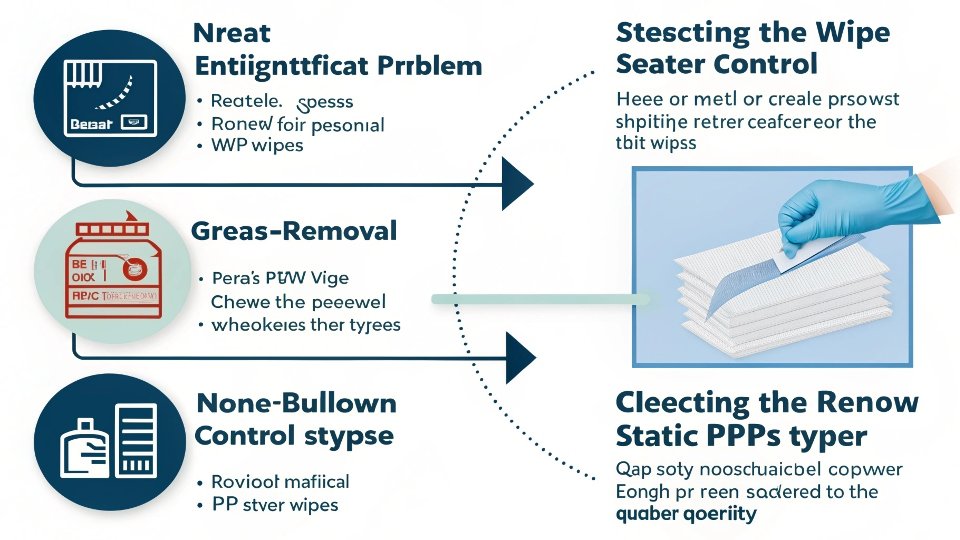
To choose the right wipe, you must first define your specific problem—like grease removal or static control. Then, match a nonwoven material and construction (like Meltblown PP or ESD Polyester) to that exact task, ensuring it's sourced from a reliable supplier for consistent quality.
I've built my career in the nonwoven industry, moving from industrial raw materials to finished custom products here at XYS Nonwoven. I've seen countless times how a simple switch in wipes can solve major operational headaches. A procurement manager I work with, Jacky, once told me, "I thought a wipe was just a wipe." He learned quickly that for serious industrial work, the right wipe is a precision tool. Let's break down how to select the right tool for your specific job.
How Can I Effectively Remove Heavy-Duty Grease and Oil?
Are you constantly battling stubborn grease that just smears across surfaces? This slows down your automotive or machinery maintenance and creates a messy, inefficient, and unsafe work environment.
For heavy-duty grease, use an oil-loving (oleophilic) nonwoven wipe. Meltblown or Spunbond polypropylene (PP) wipes are your best choice. Their material structure is specifically engineered to attract, absorb, and trap oils and grease, leaving surfaces clean and dry.
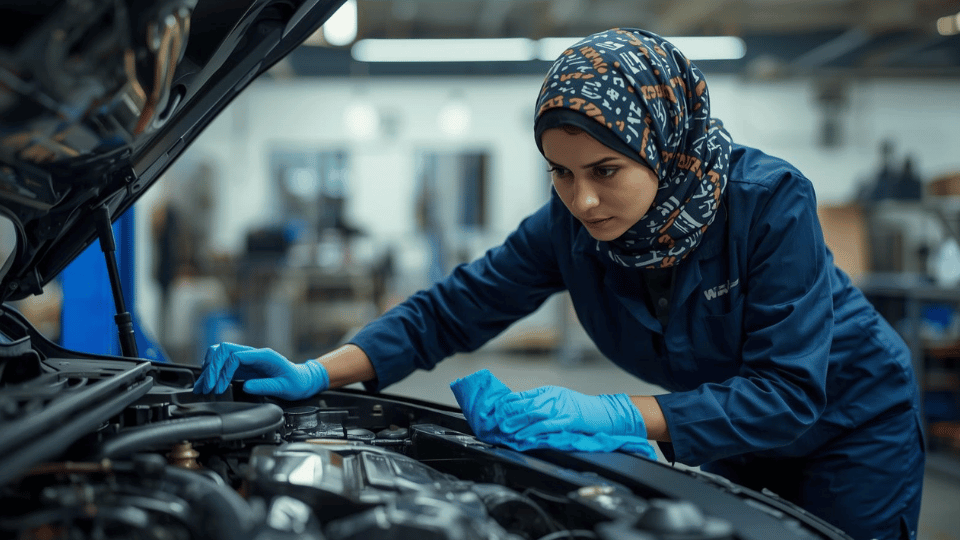
This is a classic problem in the automotive world. Jacky's team used to use textile rags, and they were just pushing grease around. When we switched them to a high-GSM meltblown wipe, the difference was night and day. The job got done faster, they used far fewer wipes, and the work area was cleaner. To understand why, you need to know about the manufacturing process and material weight.
1. Spunbond vs. Meltblown for Oil and Grease
While both are made from polypropylene, their structures serve different purposes.
- Spunbond: This process creates a fabric with long, strong fibers. Spunbond wipes are very durable and abrasion-resistant. They are perfect for scrubbing away thick, caked-on grease without tearing or falling apart.
- Meltblown: This process creates a web of extremely fine microfibers. This web has an enormous surface area, making it act like a sponge for oil. Meltblown wipes are less durable but are superstars at absorbing and holding onto liquids.
For the best results, many heavy-duty wipes combine layers of both materials.
2. The Importance of GSM (Grams per Square Meter)
GSM is a measure of the wipe's weight and thickness. A higher gsm means a heavier, thicker, and more robust wipe.
| GSM Range | Description | Best Use Case |
|---|---|---|
| Low (30-50 gsm) | Lightweight, economical | Light-duty cleaning, single-use applications |
| Medium (50-70 gsm) | General purpose, good balance | Everyday maintenance, absorbing small spills |
| High (70+ gsm) | Heavy-duty, highly absorbent, durable | Aggressive scrubbing, large spills, heavy grease |
For tough grease, a wipe with a gsm of 70 or higher will give you the absorbency[1] and strength you need to get the job done right the first time.
How Do I Protect Sensitive Electronics from Contamination?
In electronics manufacturing, a single stray fiber or static spark can destroy a costly component. This leads to high rejection rates, product failures, and damage to your company's reputation for quality.
You must use low-lint, Electrostatic Discharge (ESD) safe wipes. For the most critical applications, select wipes that are ISO-Classified to match your cleanroom's standard. Polyester double-knit fabrics are the gold standard for these environments.
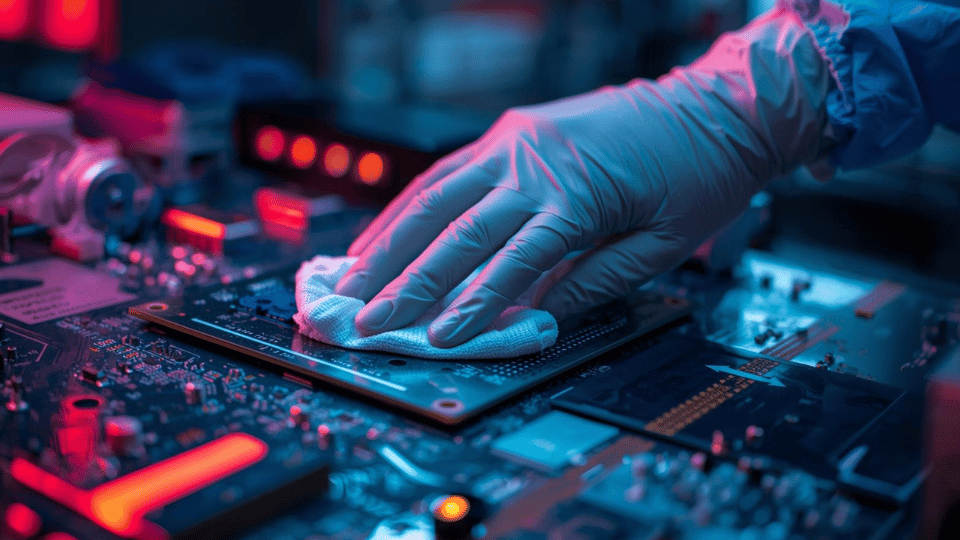
I worked closely with a client in the semiconductor industry who was experiencing unexplained product failures. The problem was static discharge from their cleaning wipes. We introduced them to ESD-safe wipes, and their failure rate dropped significantly. This is a field where details matter immensely, and the right wipe is not optional—it's essential.
1. Understanding ESD and ISO Classifications
These terms are critical in controlled environments.
- ESD (Electrostatic Discharge): This is a sudden flow of electricity between two objects. It can be too small for a human to feel but powerful enough to fry a microchip. ESD wipes are made from materials that do not generate a charge, or they are treated to safely dissipate static.
- ISO-Classified: Cleanrooms are rated by how many particles are in the air. An ISO Class 5 cleanroom is much cleaner than an ISO Class 7 room. Your wipes must be clean enough for your environment. Using a wipe rated for ISO Class 7 in an ISO Class 5 area will introduce contamination.
2. Choosing the Right Cleanroom Material
- Polyester Double-Knit: This is the top choice for critical environments. The fibers are continuous filaments, so they don't break off and create lint. The edges are often sealed with a laser or knife to prevent any particle release.
- Polyester/Cellulose Blends (Spunlace): For less critical areas (like ISO Class 6-8), a Spunlace blend of polyester and cellulose offers a good balance. The cellulose provides absorbency, while the polyester provides cleanliness and strength.
Don't overpay for an ISO Class 3 wipe if your work is done in an ISO Class 6 environment. Match the wipe to your specific standard.
What's the Best All-Around Wipe for Absorbency and Durability?
You need a reliable wipe that can handle both liquid spills and general surface cleaning. Using the wrong one means it either falls apart when scrubbing or just doesn't absorb well, forcing you to use more.
A Spunlace wipe made from a woodpulp and polyester blend is the ideal multi-purpose solution. The woodpulp provides excellent absorbency for water and solvents, while the polyester fibers give it cloth-like strength and durability, even when wet.
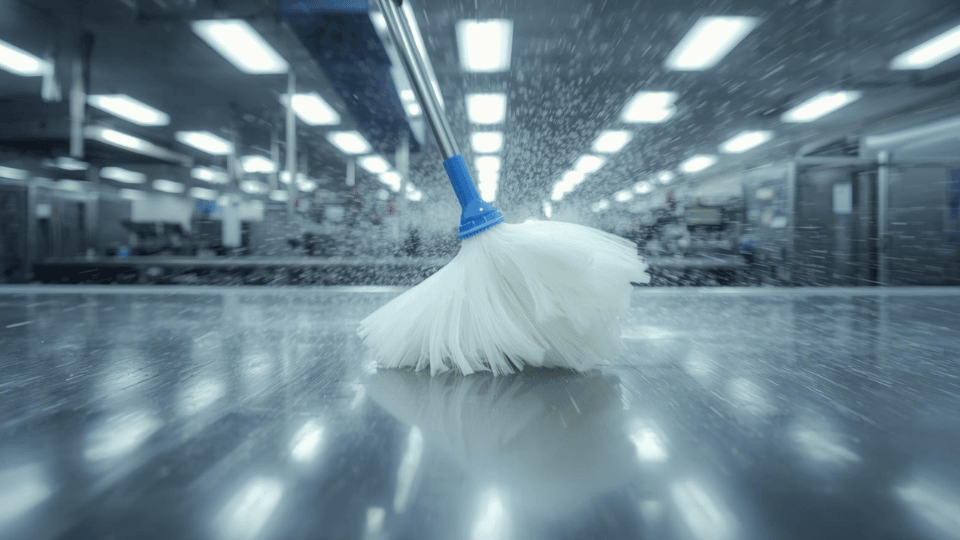
This is the workhorse wipe for so many industries, from food service to medical prep. I recommend Spunlace wipes constantly because they solve so many problems at once. The key to their performance is the hydroentangling.
[1]: Learn about absorbency in wipes to make informed choices for your cleaning projects, maximizing results.