
What are Nonwoven Spunlace Wipes?
Struggling to find a wipe that's strong, soft, and doesn't leave lint behind? It’s a common problem for industries needing high-quality cleaning solutions that you can consistently rely on.
Spunlace nonwoven wipes are fabrics created by entangling fibers, like polyester and viscose, using high-pressure water jets. This process, called hydroentanglement, creates a soft, strong, absorbent, and low-lint material without chemical binders, making it ideal for everything from personal hygiene to industrial cleaning.
!A close-up shot of the texture of a white spunlace nonwoven wipe. 1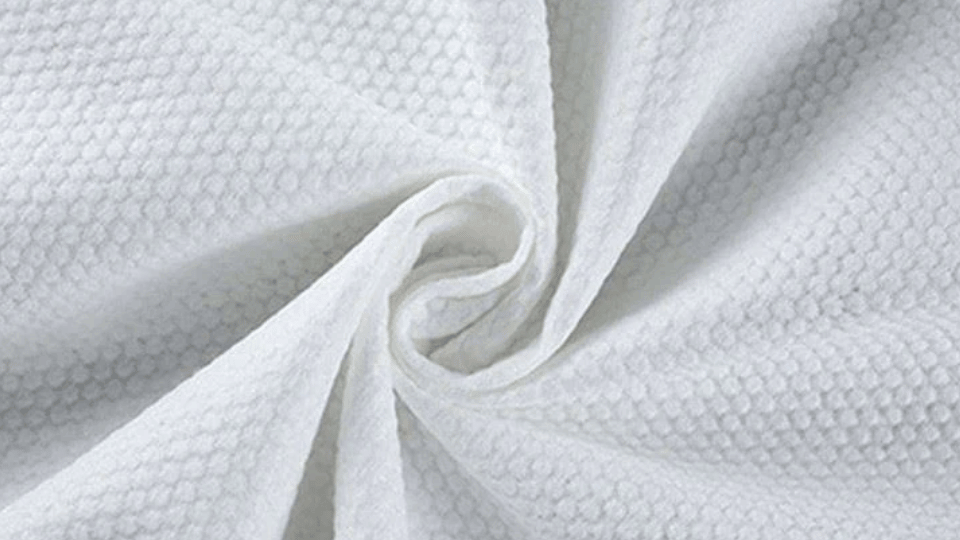
I remember talking with Jacky, a procurement manager for an industrial wipes manufacturer. He was constantly dealing with complaints about wipes falling apart or leaving residue on sensitive equipment. He needed a reliable material. This is a story I hear often, and it’s why understanding the specifics of materials like spunlace is so important. For professionals like Jacky, the right wipe isn’t just a convenience; it's critical for quality control and efficiency. Let's dive deeper into what makes spunlace the go-to choice for so many applications.
What is spunlace nonwoven fabric?
Finding a fabric that’s soft enough for skin yet strong enough for scrubbing can feel impossible. You need a material that performs reliably without compromising on quality or safety.
Spunlace nonwoven fabric is created by mechanically tangling fibers with high-pressure water jets. This process avoids chemical binders, resulting in a material that is exceptionally soft, strong, absorbent, and pure. It’s a versatile fabric used in hygiene, medical, and industrial applications.
!An illustration showing the hydroentanglement process of creating spunlace fabric. 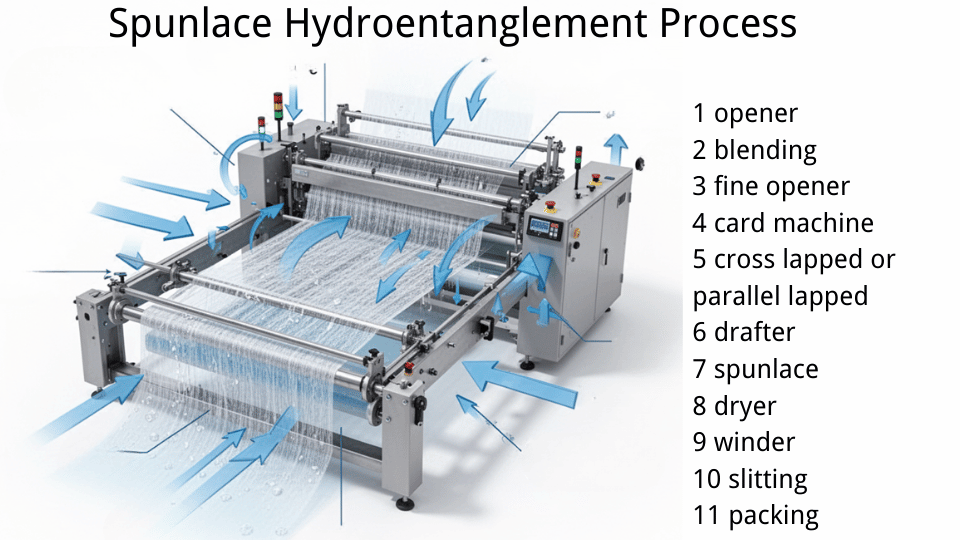
When I first entered the nonwovens industry, I was amazed by the technology. The idea of using just water to create such a strong fabric was impressive. I once visited a factory and saw the process firsthand. Loose fibers go in one end, get hit with these powerful micro-jets of water, and come out the other end as a unified, cloth-like sheet. This method, hydroentanglement[1], is what gives spunlace[2] its unique set of properties. It’s not woven or knitted, but an engineered fabric designed for specific high-performance tasks. For a procurement expert like Jacky, this process guarantees a consistent product free from the contaminants that chemical binders can sometimes introduce.
The Spunlace Production Process
Understanding how a product is made helps in judging its quality. For spunlace, the magic is in the method.
- Web Formation: The process starts by creating a web of loose fibers. These can be natural fibers like cotton or wood pulp, or synthetic fibers like polyester. The choice of fiber blend is critical as it determines the final properties of the wipe.
- Hydroentanglement: This is the key step. The fiber web passes under rows of high-pressure water jets[3] that shoot out tiny, powerful streams of water. This intense energy entangles the fibers, locking them together mechanically.
- Dewatering and Drying: After entanglement, the water is removed, and the fabric is dried. The result is a strong, stable fabric created without heat or chemicals.
| Stage | Description | Key Benefit |
|---|---|---|
| Fiber Web Formation | Loose fibers (e.g., polyester, viscose) are laid out to form a uniform web. | Determines the base properties and blend of the final fabric. |
| Hydroentanglement | High-pressure water jets mechanically entangle and interlock the fibers. | Creates strength and softness without chemical binders. |
| Drying & Finishing | The entangled web is dried and can be treated for specific properties. | Results in a pure, lint-free, and highly absorbent finished fabric. |
What is the spotlight on Spunlace?
Many materials force a choice between strength and softness. This compromise can lead to products that tear easily or feel too harsh for delicate tasks, causing frustration for end-users.
Spunlace shines because it offers superior softness, high absorbency, and excellent strength without using chemical binders. Its low-lint nature makes it perfect for sensitive applications like medical care, electronics cleaning, and personal hygiene wipes, where purity is essential.
!A collage of different spunlace products: baby wipes, medical gauze, and industrial cleaning cloths. 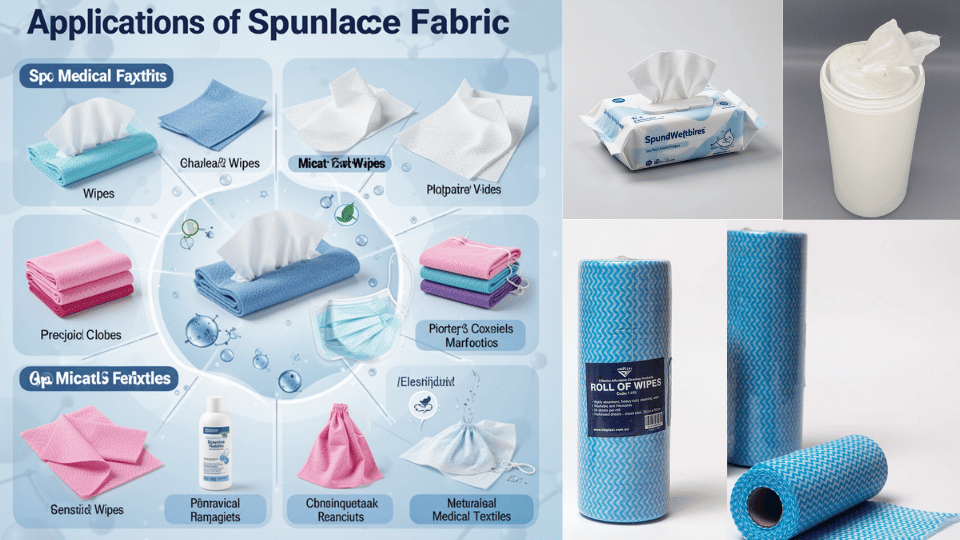
I’ve worked with many clients, like Jacky, who are responsible for sourcing materials for industrial wipes. Their challenge is always the same: find a material that can handle tough solvents and grease but won't scratch surfaces or leave lint. Spunlace is often the answer. Its unique production process creates a fabric that is both clean and durable. Because no glues are used, there's no residue to worry about, which is a huge benefit in industries like printing or automotive painting. The combination of softness, strength, and purity is what truly puts spunlace in the spotlight across so many different industries.
Key Properties and Advantages
When selecting a wipe, the material's properties directly impact performance.
- High Absorbency[4]: The entangled fiber structure creates pockets that trap and hold liquid effectively, making it ideal for wet wipes and spill control.
- Superior Strength: Spunlace maintains its integrity even when wet, allowing for rigorous scrubbing without tearing or falling apart.
- Ultra-Softness: The absence of chemical binders and the use of fine fibers result in a cloth-like feel that is gentle on skin and sensitive surfaces.
- Low Lint: The mechanical entanglement process locks fibers in place, minimizing the release of particles during use.
| Property | Benefit for Industrial Use | Benefit for Personal Care |
|---|---|---|
| Absorbency | Quickly soaks up oils, solvents, and water. | Holds cleansing solution effectively for a moist wipe. |
| Strength | Resists tearing when used on rough surfaces. | Durable enough for cleaning without disintegrating. |
| Softness | Prevents scratching on sensitive equipment or polished surfaces. | Gentle and non-irritating on sensitive skin. |
| Low Lint | Ensures a clean, residue-free surface for painting or assembly. | Does not leave behind annoying fibers on the skin. |
Why use Spunlace Non-Woven Fabric for Wet Wipes?
Choosing the wrong material for wet wipes can lead to poor performance. Wipes might dry out too quickly, tear during use, or worse, irritate the skin due to harsh materials or chemicals.
Spunlace is the ideal material for wet wipes because it combines high absorbency to hold liquids, excellent wet strength to prevent tearing, and a soft texture that's gentle on the skin. Since it's made without chemical binders, it is exceptionally pure and safe for hygiene applications.
!Close-up of a stack of wet wipes, showing their texture and moisture. 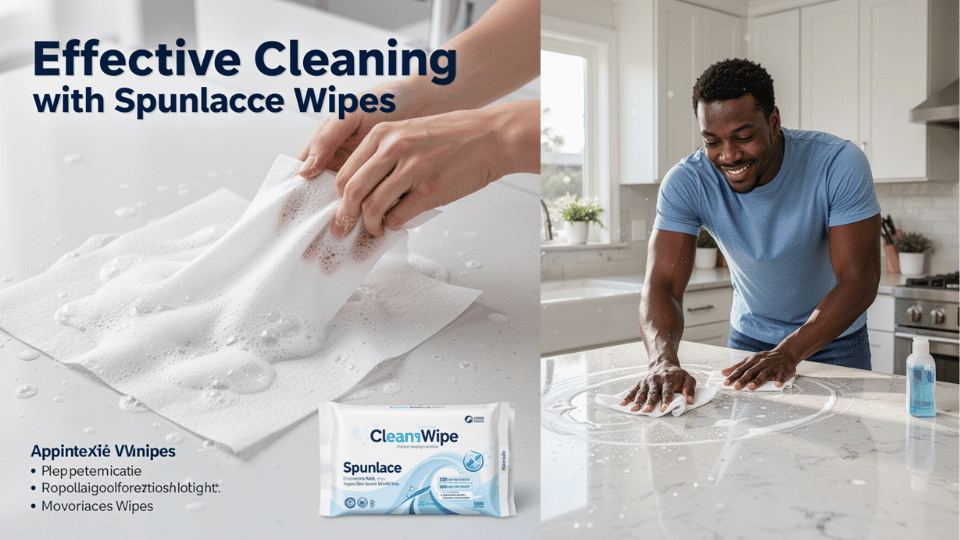
A huge part of my work involves helping clients create custom non-woven products, and wet wipes are a massive market. In fact, spunlace accounts for the majority of materials used in wet wipes. I often explain to partners that the reason is simple: spunlace delivers on all the key requirements. For personal care products that touch the skin, especially for babies, you cannot compromise on safety and softness. The hydroentanglement process ensures this purity. For a procurement manager sourcing for a private label brand, consistency in softness and strength is non-negotiable. Spunlace provides that reliability, ensuring every wipe in the package performs as expected.
Material Selection Matters
The fibers chosen to create the spunlace fabric are critical for the final wipe's performance.
- Viscose/Polyester (PET) Blends: This is the most common combination. Viscose (made from wood pulp) provides excellent absorbency and a soft feel, while polyester adds strength and durability. The ratio can be adjusted to balance cost and performance.
- 100% Cotton: For premium, eco-friendly applications, 100% cotton is used. It's naturally soft, hypoallergenic, and biodegradable, making it perfect for baby wipes and facial wipes.
- Other Natural Fibers: Bamboo and other natural fibers are also becoming popular for their sustainable properties and soft texture.
| Fiber Type | Key Characteristic | Common Use Case |
|---|---|---|
| Viscose/Polyester (PET) Blends[5] | Balanced softness, strength, absorbency, and cost. | General-purpose wet wipes, household cleaning wipes. |
| 100% Cotton | Ultra-soft, hypoallergenic, biodegradable. | Premium baby wipes, facial cleansing cloths. |
| 100% Polyester | High strength, durability, and abrasion resistance. | Industrial wipes for heavy-duty cleaning. |
| Woodpulp/PET Blend | Good absorbency and wet strength. | Industrial and food service wipes. |
What are the benefits of Spunlace Nonwoven Wipes?
In a competitive market, you need a product that offers clear advantages. Using inferior wipes can lead to inefficiency, surface damage, or poor hygiene, reflecting badly on your business and standards.
Spunlace nonwoven wipes offer a superior combination of softness, strength, absorbency, and purity. They are lint-free, making them safe for critical cleaning, and since no chemical binders are used, the risk of contamination or skin irritation is minimized. This versatility makes them highly effective.
!A person easily wiping a dirty surface clean with a single spunlace wipe. 5
Over the years, I've seen how the right tool can make all the difference. Jacky, the procurement manager I mentioned, finally switched his company's main line of industrial wipes[6] to a spunlace blend. The feedback was immediate. His downstream customers in the automotive and electronics industries praised the new wipes for being stronger and leaving no residue. This switch not only improved product quality but also reduced customer complaints, saving his company time and money. It’s a perfect example of how choosing a high-performance material like spunlace directly impacts business success. The benefits aren't just features on a spec sheet; they solve real-world problems.
A Wide Range of Applications
The unique properties of spunlace make it suitable for a diverse set of applications.
- Personal Care & Hygiene: Its softness and purity make it the top choice for baby wipes, facial masks, and cosmetic removal pads.
- Medical & Healthcare: Spunlace is used for surgical gowns, drapes, and medical wipes because it is sterile, soft, and doesn't leave fibers behind in wounds.
- Industrial & General Cleaning: The material’s strength and absorbency are perfect for heavy-duty wipes used in manufacturing, automotive, and food service to clean up grease, oil, and spills.
| Application Area | Why Spunlace is a Good Fit | Example Product |
|---|---|---|
| Hygiene | Gentle on skin, highly absorbent, and lint-free. | Baby Wipes, Face Wipes |
| Medical | Sterile, strong, and binder-free to avoid contamination. | Wound Dressings, Surgical Gowns |
| Industrial Cleaning | Durable, solvent-resistant, and low-linting for critical tasks. | Industrial Degreasing Wipes |
| Household | Absorbent and strong for cleaning spills and surfaces. | Reusable Kitchen Cloths |
Conclusion
Spunlace nonwoven wipes offer a unique blend of softness, strength, and purity. Created through hydroentanglement, they provide a reliable, high-performance solution for countless hygiene, medical, and industrial needs.
[1]: Explore this link to understand the innovative hydroentanglement process that revolutionizes fabric strength and quality.
[2]: Discover the unique properties of spunlace fabric and how it is engineered for high-performance applications.
[3]: Find out how high-pressure water jets are used to create strong, durable fabrics through innovative technology.
[4]: Learn how high absorbency enhances the performance of industrial wipes, making them effective for spill control and cleaning.
[5]: Discover why Viscose/PET blends are popular for wet wipes, balancing cost and performance effectively.
[6]: Learn how industrial wipes can boost cleaning efficiency and safety in manufacturing environments, making them essential tools.